
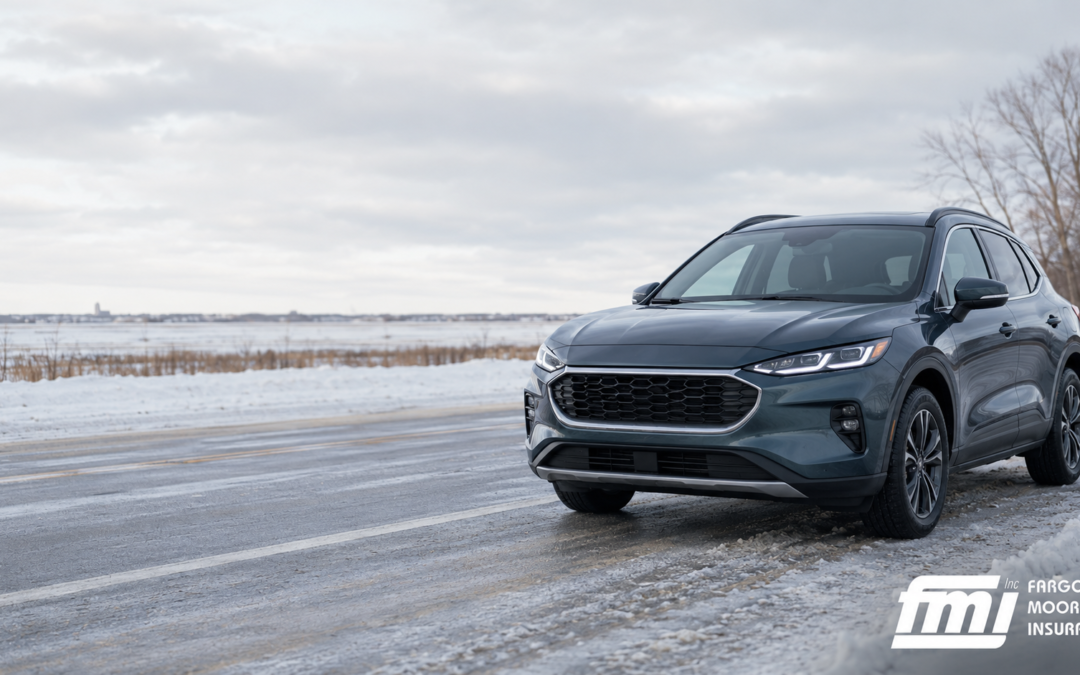
A new vehicle can feel like a smart, exciting purchase, especially when it is ready for Fargo winters, I-29 commutes, weekend trips to the lakes, and everyday driving around the Moorhead area. But if that vehicle is financed or leased, there is one coverage question worth asking before you assume your auto policy has everything handled:
If your vehicle were totaled, would your insurance payout be enough to pay off your loan?
That is where gap insurance can matter.
What Gap Insurance Does
Gap insurance helps cover the difference between what your vehicle is worth and what you still owe on your loan or lease after a covered total loss.
A standard auto insurance policy generally looks at the vehicle’s actual cash value at the time of the loss. Your lender, however, looks at your remaining loan balance. Those two numbers are not always the same.
For example, say you bought a vehicle for $36,000 and still owe $32,000. After a serious accident, the vehicle is declared a total loss and its actual cash value is $27,000. Without gap coverage, you may still be responsible for the remaining $5,000 balance.
Gap insurance is designed to help with that shortfall.
Why Fargo-Moorhead Drivers Should Pay Attention
Drivers in Fargo, North Dakota and the broader Moorhead service area deal with conditions that can make a total loss more realistic than many people expect.
Winter driving can bring snow-packed roads, blowing snow, icy intersections, reduced visibility, and longer stopping distances. A routine commute can become stressful quickly when road conditions change between Fargo, West Fargo, Moorhead, and the surrounding rural areas.
That does not mean every driver needs gap insurance. It does mean financed and leased vehicle owners should understand the risk before skipping it.
The North Dakota Department of Transportation has also noted how winter conditions play a significant role in crashes in the state, especially during the colder months. Local drivers already know that weather can turn fast here. Gap insurance is one way to protect against the financial side of a worst-case vehicle loss.
When Gap Insurance Is Usually Worth Considering
Gap insurance may be worth it if your loan balance is higher than your vehicle’s current value, or if there is a good chance that could happen soon.
It is especially worth reviewing if:
You made a small down payment.
A lower down payment can leave you owing more than the vehicle is worth during the early part of the loan.
You chose a longer loan term.
Loans that stretch beyond five years can make it take longer to build equity in the vehicle.
You leased your vehicle.
Leasing companies often require gap coverage, but it is still smart to understand how it is handled.
You rolled old loan debt into a new vehicle.
If you carried negative equity from a previous vehicle into the new loan, the gap can be larger right away.
You bought a vehicle that may depreciate quickly.
Some vehicles lose value faster than others depending on model, mileage, market demand, and condition.
You rely on the vehicle every day.
If losing the vehicle would leave you with both transportation costs and a remaining loan balance, gap coverage may provide useful protection.
When Gap Insurance May Not Be Necessary
Gap insurance is not automatically worth it for every driver.
You may not need it if you paid cash for your vehicle, made a large down payment, or owe less than the vehicle is currently worth. It may also become unnecessary later in the loan once your balance drops below the vehicle’s value.
That is why gap insurance should not be treated as a set-it-and-forget-it decision. It can make sense early in ownership and become less useful over time.
A good habit is to review it when you review your auto insurance policy, refinance a vehicle, pay down a large part of the loan, or trade vehicles.
A Simple Way to Decide
Here is a practical way to think about it:
First, check your current loan or lease payoff amount.
Next, estimate your vehicle’s current market value using a trusted vehicle valuation tool or recent comparable listings.
Then compare the two numbers.
If you owe significantly more than the vehicle is worth, gap insurance may be a smart layer of protection. If the numbers are close, the decision may depend on the cost of the coverage and your comfort with the out-of-pocket risk. If the vehicle is worth more than you owe, gap insurance likely provides little benefit.
The key question is simple: Would paying the difference create a financial problem if the vehicle were totaled tomorrow?
Gap Insurance and Your Auto Policy
Gap coverage can sometimes be added through an auto insurance carrier, purchased through a lender, or included in certain lease agreements. The details can vary, so it is worth checking how the coverage works before assuming you have it.
Ask questions like:
Does my current policy include gap coverage?
Is there a limit on how much the coverage will pay?
Does it apply to both theft and accident-related total losses?
Are deductibles handled separately?
When should I remove the coverage?
These are the kinds of details that can make a big difference after a claim.
The Bottom Line for Fargo Drivers
Gap insurance is often worth considering for Fargo-Moorhead drivers who finance or lease newer vehicles, especially when the loan is long, the down payment was small, or the vehicle may depreciate faster than the loan balance drops.
It may not be necessary forever, but it can be valuable during the period when your loan balance is higher than the vehicle’s actual value.
If you are unsure where your vehicle stands, FMI can help you review your current auto insurance, look at your loan situation, and decide whether gap coverage makes sense for your needs.
Sources referenced: Fargo Moorhead Insurance and North Dakota Department of Transportation.