
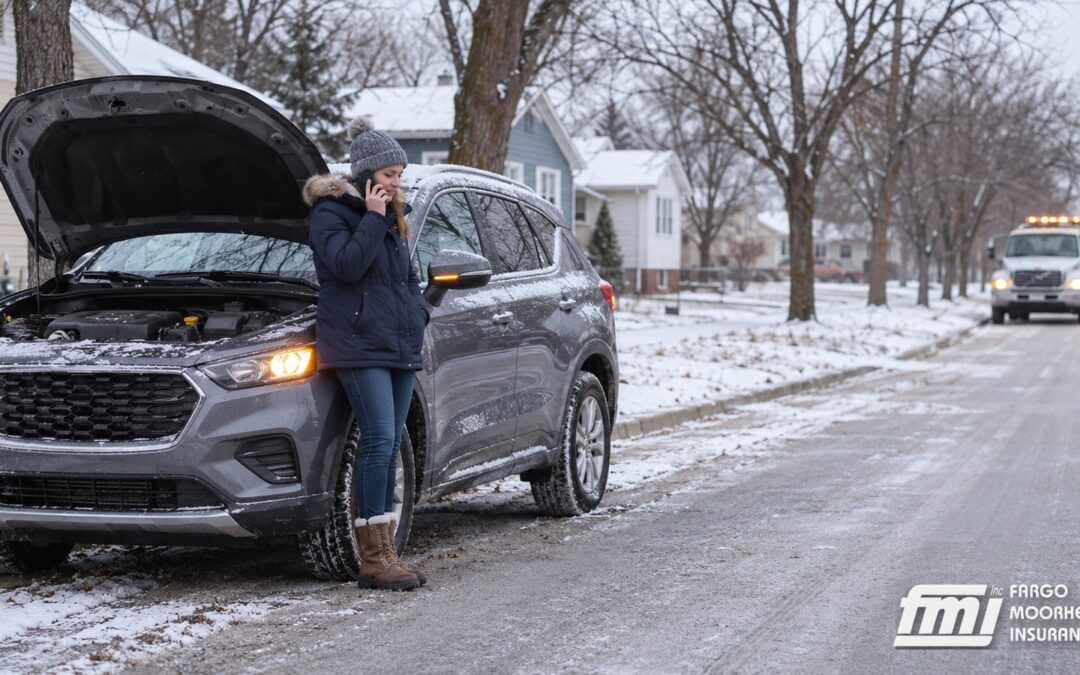
A practical guide to breakdowns, roadside assistance, towing, covered damage, and rental reimbursement before deep cold arrives.
A car that will not start on a mild afternoon is inconvenient. A car that will not start in a Fargo parking lot when the temperature drops can become a much bigger problem. Cold weather strains batteries, thickens fluids, lowers tire pressure, and exposes maintenance issues that were easy to miss in warmer months.
Many drivers assume their auto policy will pay whenever winter leaves them stranded. The answer depends on why the vehicle stopped and which optional coverages are on the policy. Standard auto insurance is designed mainly for accidental losses, not routine wear or mechanical failure. Roadside assistance can still be valuable, but it serves a different purpose.
A Breakdown and a Covered Loss Are Not the Same
If an aging battery dies, an alternator fails, or a belt wears out, the repair itself is usually considered maintenance or mechanical breakdown. A standard personal auto policy generally does not pay to replace the failed part simply because cold weather contributed to the problem.
The same principle applies when a vehicle will not start because of neglected maintenance. Insurance is not a substitute for oil changes, battery testing, tire replacement, or other routine service. A manufacturer warranty, extended service contract, or separate mechanical breakdown product may apply in some situations, but those are different from ordinary auto insurance.
When Auto Insurance May Apply
Coverage may come into play when the car stops because of a covered event rather than a worn-out component. Imagine sliding into a curb on an icy Fargo street and damaging a wheel or suspension. Collision coverage may help with covered vehicle damage after the deductible.
Comprehensive coverage may apply to certain non-collision losses, such as a fallen tree limb, vandalism, theft, or contact with an animal. The specific cause still matters. A cracked engine block from poor maintenance is not treated the same way as damage from a covered falling object.
If the vehicle is damaged, protect yourself first. Move to a safe location when possible, turn on hazard lights, and document the scene after immediate danger has passed. Photos, the time and location, road conditions, and towing information can make a later coverage conversation easier.
What Roadside Assistance Usually Helps With
Roadside assistance is optional on many auto policies. Depending on the carrier and plan, it may arrange or reimburse services such as a battery jump-start, towing, flat-tire help, lockout service, or delivery of a small amount of fuel. Some plans also help when an electric vehicle needs towing to a charging location.
Roadside coverage normally pays for the service that gets you moving or gets the vehicle to a repair shop. It does not usually pay for a new battery, alternator, tire, or other repair part. Limits may apply to towing distance, service calls, dollar amounts, and the number of uses.
Before Fargo-Moorhead temperatures fall sharply, check whether roadside help is on your policy and save the service number in your phone. Also confirm whether you must call the insurer’s dispatch service or whether you can choose a provider and request reimbursement later.
Why Rental Reimbursement May Not Pay for a Breakdown
Rental reimbursement is another optional coverage that drivers sometimes misunderstand. It generally helps with temporary transportation when an insured vehicle is being repaired after a covered claim. A rental car needed because of a mechanical breakdown alone may not qualify.
For example, if collision damage from an icy-road crash makes your vehicle undrivable, rental reimbursement may apply subject to the policy’s daily and total limits. If the vehicle is in the shop only because its transmission failed, the same coverage may not respond. Ask what event activates the coverage, how long benefits can last, and whether there is a waiting period.
A Fargo Winter Breakdown Checklist
A few steps now can reduce confusion when the first serious cold arrives:
1. Have the battery, charging system, tires, lights, wipers, and winter-grade washer fluid checked. North Dakota safety guidance also recommends carrying a basic winter survival kit and checking road and weather conditions before travel.
2. Read the roadside-assistance section of your declarations page or policy. Note towing limits, service-call rules, and the phone number to use.
3. Review your collision and comprehensive deductibles. Choose amounts you could reasonably pay after an unexpected loss.
4. Check rental-reimbursement limits. A low daily limit may not cover the full cost of a winter rental vehicle.
5. Keep warm clothing, blankets, a phone charger, an ice scraper, a small shovel, water, and nonperishable food in the vehicle. If you become stranded in severe weather, stay with the vehicle, keep the exhaust pipe clear, and make the vehicle visible.
Know Which Kind of Help You Are Buying
Winter breakdown coverage is not one single benefit. Mechanical repairs, roadside service, damage coverage, and rental reimbursement each answer a different problem. Understanding those differences before a no-start morning can save time and prevent an unpleasant surprise.
If you are unsure how your current policy handles towing, roadside calls, or temporary transportation, FMI can review the details with you. Fargo Moorhead Insurance can also help you compare options that fit the way you drive in Fargo and across the Moorhead service area.