
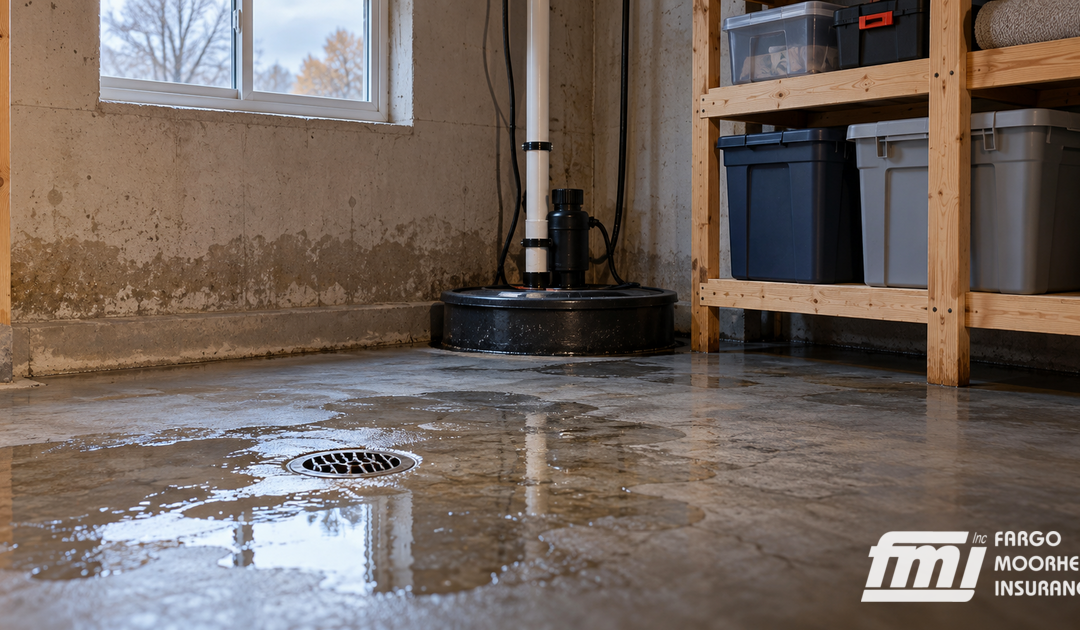
A basement drain starts gurgling after heavy rain. A sump pump stops during a power outage. Water pushes back through a floor drain and damages flooring, drywall, and stored belongings. For Fargo homeowners, one of the worst parts of a sewer or sump backup is discovering that a standard home policy may not cover the cleanup.
Most standard homeowners policies exclude water that backs up through a sewer or drain or overflows from a sump system. Many insurers offer optional water-backup coverage, but it must usually be added before a loss. Understanding that distinction now is much easier than sorting it out with a wet basement.
Standard Home Insurance Often Excludes Sewer Backup
Homeowners insurance covers many sudden losses, but it does not cover every way water can enter a house. According to the North Dakota Insurance Department, water damage from backed-up drains or sewers is not covered under most standard homeowners policies. Some insurers offer an endorsement, which is an optional policy change, for this type of loss.
That is why it is important to review the declarations page and endorsements rather than assuming all basement water damage is treated the same. The Department’s guidance on storms and winter weather specifically recommends checking whether a policy includes sewer-backup protection.
Water Backup Coverage Is Different From Flood Insurance
The source of the water matters. A water-backup endorsement is not a substitute for flood insurance. Flood generally refers to water that covers normally dry land and affects multiple properties or a wider area. Surface water entering through a basement window or foundation opening may be treated as flood, while water forced backward through a drain may be treated as sewer backup.
The distinction can become complicated when heavy surface flooding contributes to a sewer or sump failure. Some endorsements continue to exclude damage when flood is a direct or indirect cause. Review the wording of both policies and ask how concurrent causes are handled.
What a Water Backup Endorsement May Cover
Coverage varies by insurer, but a water-backup endorsement may help with covered expenses such as:
- Professional water extraction, drying, cleaning, and sanitation.
- Repair or replacement of damaged drywall, flooring, trim, and other covered building materials.
- Replacement of covered personal property damaged by the backup, subject to limits and valuation terms.
- Certain additional living expenses if the covered damage makes the home uninhabitable and the policy includes that protection.
The endorsement normally has its own limit, and that limit may be much lower than the dwelling limit shown on the main policy. It may also have a separate deductible. Those two numbers are worth checking before deciding whether the coverage fits your home and basement use.
What It May Not Cover
Even with an endorsement, coverage may be limited or excluded for:
- Damage caused by a broader flood or surface-water event.
- Groundwater seepage through a foundation, walls, or floor.
- Long-term moisture, repeated seepage, mold, rot, or deterioration.
- Repair of the sewer line, drain, or failed sump pump itself unless another endorsement applies.
- Losses tied to poor maintenance or a problem that was known and not corrected.
Policy language determines the result. Ask what causes are covered, what property is included, whether cleanup is part of the limit, and whether special restrictions apply to finished basements.
How Much Water Backup Coverage Should You Consider
Start with what is actually below grade. A mostly empty utility basement presents a different exposure than a finished lower level with carpet, drywall, furniture, electronics, a furnace, and stored belongings. Estimate the cost to remove contaminated water, dry the space, replace damaged finishes, and replace the items you keep there.
A low endorsement limit may help with a small incident but fall short after a serious backup. Compare available limits and deductibles with the likely cleanup and rebuilding cost. If you have made basement improvements since your last policy review, update that estimate.
Reduce the Chance of a Basement Backup
Insurance is only one part of the plan. Fargo-Moorhead homeowners can also reduce risk by taking practical steps:
- Test the sump pump regularly and clear debris from the pit.
- Consider a battery backup or secondary pump for outages and primary-pump failure.
- Have a qualified professional evaluate whether a backwater valve is appropriate for the home.
- Keep gutters, downspouts, and exterior drainage working so water moves away from the foundation.
- Store important documents and valuables off the basement floor in water-resistant containers.
- Avoid putting grease, wipes, and other clogging materials down household drains.
Maintenance cannot prevent every municipal sewer problem or severe weather event, but it can reduce the chance of a loss and limit the damage if one occurs.
What to Do After a Backup
Protect people first. Sewage can contain harmful contaminants, and electrical equipment near water can create another hazard. Avoid contact, keep children and pets away, and use qualified cleanup help when needed. Report the loss promptly, take photos and video before removing damaged items when it is safe to do so, and keep receipts for emergency work.
Do what you reasonably can to prevent further damage, but avoid permanent repairs until the insurer has explained the claim process and had an opportunity to inspect. Keep notes of calls, contractors, and expenses.
Review the Gap Before Water Finds It
Sewer and sump-pump backups are commonly excluded from standard home insurance, but optional coverage may be available. The right limit depends on your basement, belongings, and the cost of cleanup and repairs. Contact Fargo Moorhead Insurance to review your current policy, compare available water-backup options, and make sure you understand how that coverage differs from flood insurance before you need to file a claim.