
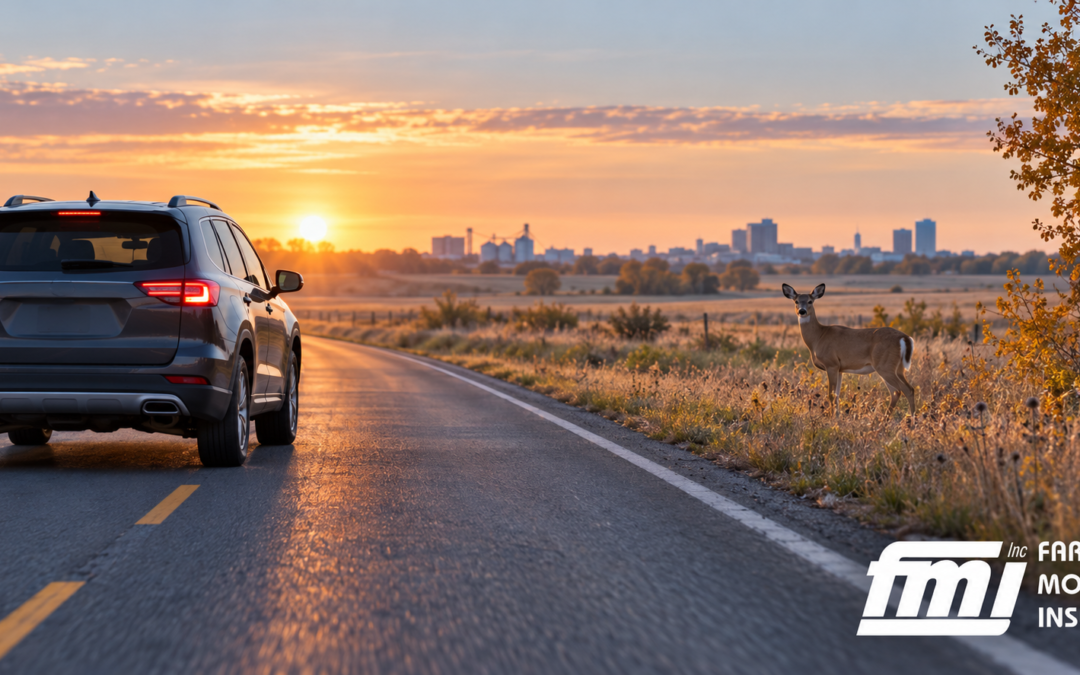
A deer at the edge of the road can turn an ordinary September drive into a split-second decision. Around Fargo and throughout the Fargo-Moorhead area, fall means earlier sunsets, harvest traffic, and more time behind the wheel in low light. It is also a good time to answer a practical insurance question: If you hit a deer, which part of your auto policy may pay for the damage?
The short answer is that damage from hitting a deer is usually handled under comprehensive coverage, not collision coverage. The details matter, though, especially if you carry a deductible or have an older vehicle without optional physical damage coverage.
Hitting a Deer Is Usually a Comprehensive Claim
Comprehensive coverage helps pay for damage to your vehicle caused by events other than a typical crash with another car or object. The North Dakota Insurance Department lists hitting an animal among the losses comprehensive coverage may cover, along with theft, fire, vandalism, hail, and falling objects.
That means a direct impact with a deer will generally fall under comprehensive coverage, subject to the terms of your policy. If you have only the liability coverage required to drive legally, damage to your own vehicle from the animal strike generally will not be covered. Comprehensive coverage is optional, although a lender or leasing company may require it while you finance or lease a vehicle.
Why Collision Coverage May Still Enter the Picture
The cause of the damage can change which coverage applies. Imagine a deer steps into your lane on a road outside Fargo:
- You hit the deer directly. The vehicle damage is typically considered a comprehensive loss.
- You avoid the deer but hit a guardrail, ditch, tree, or another vehicle. The damage may be handled under collision coverage instead.
Claims are evaluated based on the facts and the policy language, so give your insurer a clear description of what happened. Photos of the roadway, the vehicle, and any visible animal contact can help document the loss.
Your Deductible Still Matters
Comprehensive coverage commonly includes a deductible. That is the amount you agree to pay toward a covered claim before insurance pays the remaining covered repair cost, up to the policy’s terms and the vehicle’s value.
For example, suppose a deer strike causes $3,200 in covered damage and your comprehensive deductible is $500. You would generally be responsible for the first $500, while the policy may pay the remaining $2,700. If the repair estimate is lower than your deductible, filing a claim may not produce a payment.
Check the declarations page of your policy to confirm whether comprehensive coverage is listed and what deductible applies. Do not assume that ‘full coverage’ has one universal meaning; it is an informal phrase, and the actual coverages on the declarations page are what count.
What to Do After a Deer Collision
A calm, well-documented response can protect people first and make the claim process easier.
- Move to a safe location if the vehicle can be driven. Turn on your hazard lights and stay out of active traffic.
- Check yourself and your passengers for injuries. Call 911 when anyone is hurt, the vehicle is creating a road hazard, or emergency help is needed.
- Keep your distance from the animal. An injured deer can move suddenly and may be dangerous.
- Photograph the scene and the vehicle when it is safe. Capture several angles, visible damage, the road, and relevant surroundings.
- Arrange a tow if the vehicle has leaking fluids, broken lights, damaged tires, a bent hood that blocks your view, or anything else that makes driving unsafe.
- Notify your insurance company or agent promptly. Ask what documentation is needed and whether an inspection is required before repairs begin.
Do You Need to Report the Crash to Law Enforcement?
North Dakota treats animal collisions differently from many other reportable crashes. According to the North Dakota Highway Patrol, a driver does not need to report a collision with a deer or other undomesticated animal when it results only in property damage, regardless of the amount of vehicle damage.
That does not mean you should never call. Contact law enforcement or emergency services if someone is injured, the crash creates a traffic hazard, another vehicle or person is involved, or you need help securing the scene. If the collision occurs in Minnesota, different reporting rules may apply, so Moorhead-area drivers should follow the requirements for the state where the crash happened.
Review Your Coverage Before the Next Close Call
September is a smart time to look at your auto policy before darker commutes and fall travel become routine. Confirm whether each vehicle carries comprehensive and collision coverage, compare the deductibles with what you could comfortably pay after an unexpected loss, and check whether rental reimbursement or towing coverage is included if those services matter to you.
Fargo Moorhead Insurance recommends reviewing coverage based on the vehicle’s current value, how it is financed, and how much financial risk you are comfortable keeping. An older paid-off car may call for a different decision than a newer SUV with a loan.
The Bottom Line
If you hit a deer directly, comprehensive coverage will usually be the part of an auto policy that responds, minus the applicable deductible. If you swerve and collide with another object, collision coverage may apply instead. Knowing what appears on your declarations page before a fall drive can remove one uncertainty from an already stressful situation.
Coverage varies by insurer, policy form, endorsements, and the facts of a loss. Review your own policy or speak with a licensed insurance professional for guidance about your situation.